Beyond the Spice Rack: America's Independent Blenders Are Changing How We Season Everything
Beyond the Spice Rack: America's Independent Blenders Are Changing How We Season Everything
Let's be honest about something. That dusty jar of "Italian seasoning" sitting in the back of your cabinet — the one with the faded label and the vague expiration date — is not doing your cooking any favors. For a long time, most of us just accepted that spices were spices: generic, interchangeable, and something you grabbed off a grocery store shelf without thinking too hard about it.
That assumption is getting a serious challenge right now, and it's coming from a scrappy, passionate group of independent spice merchants operating out of small warehouses, home kitchens, and converted storefronts all across America. These are people who care deeply — sometimes obsessively — about where a pepper was grown, how a chile was dried, and whether a particular salt crystal was hand-raked from a tidal flat or strip-mined from a mountain. And the blends they're creating? They're genuinely extraordinary.
What Makes Small-Batch Spices Actually Different
Before we get into the standout players, it helps to understand why artisan spices hit differently in the kitchen. The big commercial brands are optimized for consistency and shelf life, which sounds reasonable until you realize what that actually means in practice: spices sourced from the cheapest available markets, blended in enormous batches, and sitting in distribution warehouses for months before they reach you. By the time that paprika makes it into your cart, a lot of what made it interesting is already gone.
Small-batch blenders operate on a completely different logic. Many source directly from farms — sometimes single farms in specific regions — and buy in quantities small enough that turnover stays high and freshness stays real. They're paying attention to harvest years the same way wine buyers pay attention to vintages. They're tasting constantly, adjusting ratios by hand, and often working with heirloom or heritage varieties that commercial operations passed over because they're too inconsistent or too rare to scale.
The result is spices that actually taste like something. Peppercorns with floral top notes. Smoked paprika with real wood character. Chili blends where you can identify individual ingredients rather than just "heat."
A Few Operations Worth Knowing
Diaspora Co. — technically founded in the Bay Area with roots in a mission to directly source South Asian spices — has become a genuine touchstone for the single-origin spice movement in the US. Their Pragati turmeric and Aranya pepper have developed cult followings among serious home cooks, and for good reason. The difference between their pepper and a generic grocery store grind is not subtle. It's the difference between a pencil sketch and an oil painting.
Burlap & Barrel, operating out of New York, has built its entire identity around ethical single-origin sourcing and partnerships with small farming cooperatives globally. Their Royal Cinnamon from Vietnam and Zanzibar Black Pepper have made believers out of home cooks who swore they couldn't taste the difference between spice brands. (They can. Everyone can, once they try it.) What's particularly compelling about their model is the transparency — you can actually read about the farm and the farmer behind each product on their site.
Oaktown Spice Shop out of Oakland, California, blends with the kind of regional confidence you'd expect from a city with that food culture. Their harissa blend is a pantry workhorse, and their berbere — built on Ethiopian spice traditions — has become a go-to for home cooks looking to add serious depth to roasted vegetables, braises, and grain dishes. They also do custom blending in-store, which is the kind of thing that makes a Saturday errand feel like an actual experience.
Savory Spice, with locations scattered across the country and a strong online presence, operates at a slightly larger scale but still maintains a small-batch philosophy and an impressive sourcing story. Their blends skew approachable without dumbing anything down — good entry point for cooks who are just starting to think more seriously about what they're seasoning with.
Where to Start If You're New to This
If your spice cabinet needs a reset, don't try to overhaul everything at once. Pick two or three jars from an independent blender and cook with them side by side against whatever you're currently using. The comparison does the convincing on its own.
A few blends that tend to earn permanent real estate in home kitchens:
- A great finishing salt — hand-harvested flake salts like Jacobsen from Oregon or J.Q. Dickinson from West Virginia add texture and a cleaner mineral flavor that regular kosher salt simply doesn't deliver. Use them at the table, not in the pot.
- A single-origin black pepper — grind it fresh and use it generously. Once you've cooked with a Tellicherry or Malabar pepper that still has its volatile oils intact, going back feels impossible.
- A versatile chile blend — something like an Aleppo-forward blend or a well-made smoked paprika mix works across roasted meats, eggs, hummus, pasta, and roasted vegetables. This is the workhorse of the artisan spice world.
- An adventurous finishing blend — za'atar, dukkah, or a well-sourced ras el hanout can transform a simple piece of fish or a bowl of yogurt into something that feels genuinely considered.
How to Store and Use Them Well
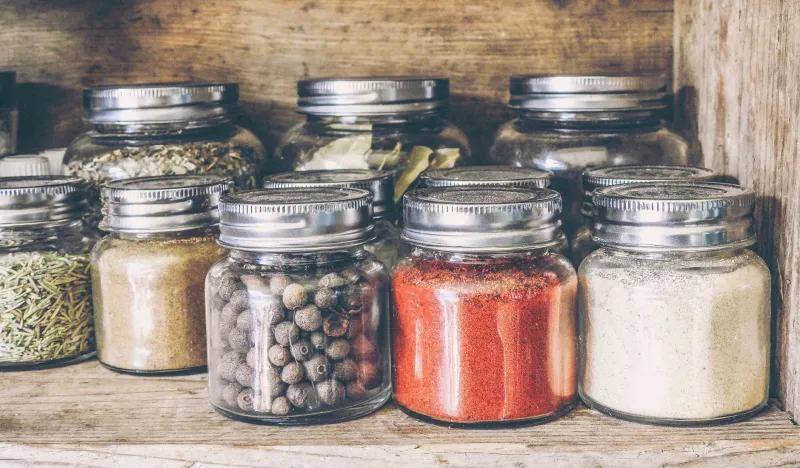
Artisan spices deserve a little more care than their commercial counterparts, mostly because you're paying for freshness and you want to protect it. Keep them away from heat and direct light — above the stove is actually the worst possible place, despite being the most convenient. Airtight glass jars are better than the tins some blends ship in, which can transfer metallic notes over time.
Buy in smaller quantities and replenish more often. It's counterintuitive if you're used to buying the big warehouse club jar to save money, but stale spices in large quantities are just a waste, regardless of how cheap they were per ounce.
And bloom them. A quick 30 seconds in a dry skillet or a splash of warm oil wakes up the aromatic compounds in most spices and makes an immediate, noticeable difference in the final dish. This step alone can bridge some of the gap between a mediocre spice and a great one — though it does even more for the great ones.
The Bigger Picture
What's happening with American artisan spice blenders is part of the same story playing out across the food world right now — the same impulse that sends people to farmers markets instead of big-box grocery stores, that makes a jar of single-origin honey feel worth the price, that turns a pantry into something more than a storage room. It's about knowing where things come from and choosing quality over convenience when the difference actually matters.
In the kitchen, seasoning is the last mile. You can source beautiful proteins and vegetables and cook them with real skill, and then undersell the whole thing with flat, stale spices. The independent blenders who are doing this work well are offering a straightforward upgrade that home cooks can feel immediately. That's a pretty compelling pitch, and the market is clearly responding to it.