Salt, Kelp, and the Coast: Why American Seaweed Is the Pantry Ingredient You Didn't Know You Were Missing
Salt, Kelp, and the Coast: Why American Seaweed Is the Pantry Ingredient You Didn't Know You Were Missing
There's a moment that happens to a lot of home cooks — usually somewhere between their third jar of imported miso paste and their second bag of Japanese kombu — when they start wondering why they're shipping their umami halfway around the world. The answer, it turns out, is that for a long time, they didn't have much of a choice. Domestic seaweed production was barely a blip. American coastal waters were full of the stuff, but almost nobody was harvesting it with the kind of intention and craft that makes an ingredient worth cooking with.
That's changed. Fast.
Over the last several years, a loose network of small-scale harvesters, coastal farmers, and ocean-minded food producers has been quietly building what amounts to a domestic seaweed industry — one that's less interested in industrial scale and a lot more interested in flavor, sustainability, and getting something genuinely delicious into your kitchen.
The Coasts Are Talking, If You Know How to Listen
Maine is probably the epicenter of this movement on the East Coast. The Gulf of Maine is cold, clean, and rich — ideal conditions for species like kelp, dulse, bladderwrack, and rockweed. Harvesters there have been working with organizations like the Maine Seaweed Council for years, but the real shift has been the arrival of a younger generation of producers who are thinking about seaweed the way a good cheesemaker thinks about milk: as a raw ingredient with real terroir, real nuance, and real potential.
On the West Coast, the story is a little different. Northern California, Oregon, and Washington have their own seaweed traditions — some rooted in Indigenous harvesting practices that go back thousands of years — and a new crop of small producers is working to honor that history while building something commercially viable. Bull kelp, sea lettuce, and wakame-adjacent species grow in abundance along the Pacific, and harvesters like those behind small operations in Mendocino County and the Olympic Peninsula are starting to get attention from chefs and specialty food buyers who are tired of importing what's literally growing in their own backyard.
What Makes Domestic Seaweed Worth Seeking Out
Here's the thing about seaweed: not all of it tastes the same, and where it grows matters enormously. Just like wine grapes or oysters, seaweed picks up the character of its environment — the mineral content of the water, the temperature, the tidal patterns, the season it was harvested. A hand-harvested Maine dulse dried slowly at low temperatures is going to taste completely different from a mass-produced product that's been sitting in a warehouse for a year.
Small-batch producers are obsessive about this stuff. They harvest at specific times of year when the plants are at peak flavor and nutrition. They dry carefully to preserve color and taste. Some are experimenting with light smoking, dry-roasting, and blending with sea salt to create products that feel less like a health food store obligation and more like something you'd reach for because you actually want to.
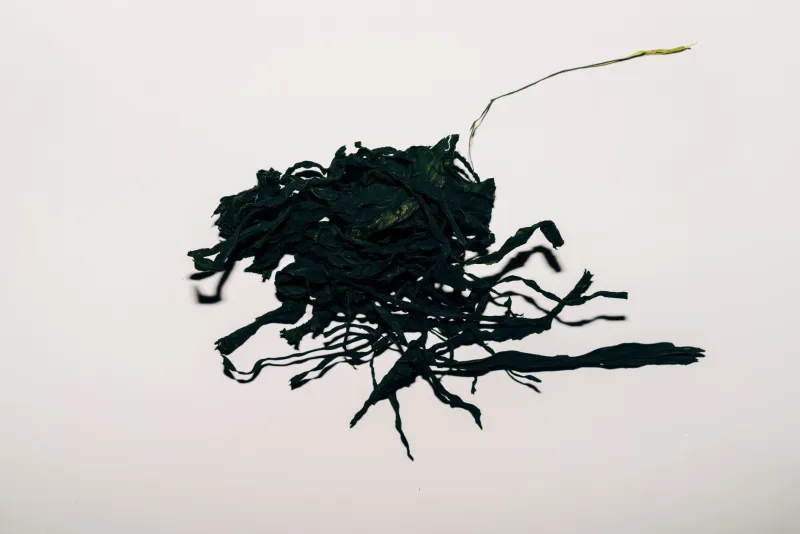
The flavor payoff is real. Dulse, for example, has a smoky, slightly bacon-like quality that makes it genuinely addictive when pan-fried or crumbled over eggs. Kelp brings a deep, brothy sweetness that's different from — but just as compelling as — Japanese kombu. Sea lettuce has a bright, grassy salinity that works beautifully in vinaigrettes and grain dishes.
Getting It Into Your Kitchen (Beyond the Sushi Mat)
This is where a lot of people get stuck. Seaweed sounds interesting in theory, but then it sits in the cabinet next to the fish sauce and the tamarind paste, waiting for a recipe that never quite materializes. The trick is to stop thinking of it as a specialty ingredient that requires a specific dish and start thinking of it as a seasoning — something you reach for the way you'd reach for a pinch of salt or a squeeze of lemon.
A few easy entry points:
Kelp granules or powder are probably the most approachable format for seaweed skeptics. Sprinkle them into pasta water, stir them into salad dressings, or add a small spoonful to a pot of beans while they cook. You won't taste "seaweed" — you'll taste depth. That's the umami doing its thing.
Dulse flakes are endlessly useful. Toss them into scrambled eggs, fold them into compound butter, or scatter them over popcorn with a little smoked paprika. Several small producers are now selling dulse that's been lightly toasted, which pushes the smokiness even further and makes it feel almost meaty.
Dried kelp strips are worth keeping around for stocks and braises. Drop a piece into your next batch of chicken stock and pull it out before serving. The difference in body and flavor is noticeable in the best possible way.
Sea vegetable blends — a newer format that several American producers are experimenting with — combine two or three species into something that functions almost like a seasoning salt. Some of the most interesting ones are being made by small coastal operations that are treating the blend like a product with a point of view rather than just a mix of whatever's leftover.
The Sustainability Story Is Real
It's worth mentioning, because it matters: seaweed is about as sustainable as food gets. It requires no freshwater, no fertilizer, no arable land. It actually improves the water quality around it, absorbing excess nitrogen and carbon. Wild-harvested seaweed, when done responsibly — which the small producers in this space are almost universally committed to — has an environmental footprint that makes even the most conscientious land-based farming look complicated by comparison.
Several of the harvesters working in Maine and along the Pacific are deeply connected to conversations about ocean health, kelp forest restoration, and Indigenous food sovereignty. Buying from them isn't just a pantry upgrade. It's a small vote for a food system that takes the ocean seriously as a place worth protecting.
Where to Find the Good Stuff
Look for small-batch domestic seaweed at farmers markets in coastal cities — Portland (Maine and Oregon both), Seattle, San Francisco, and Boston are good bets. Specialty food shops with serious pantry sections have started stocking American-made seaweed products alongside their imported Japanese varieties, and it's worth asking if they don't have it yet.
Online is increasingly your best option for reaching producers directly. Many of the small harvesters running one- or two-person operations sell primarily through their own websites or through curated marketplaces focused on artisan food. The product is shelf-stable, ships well, and tends to come with the kind of thoughtful packaging and producer notes that make you feel like you actually know where your food came from.
Which, when you think about it, is exactly the point.