Ancient Grains, Living Seeds: The American Farmers Rescuing Forgotten Wheats and Corns for Your Kitchen
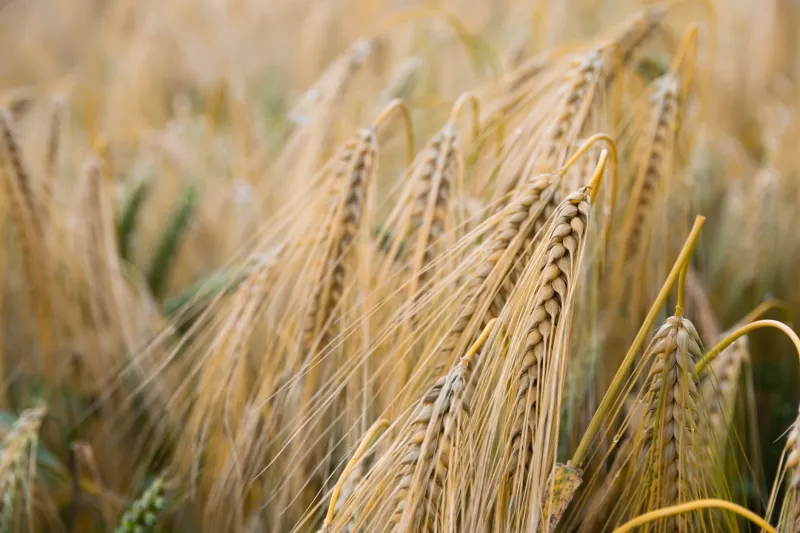
Somewhere between a seed catalog and a Saturday morning farmers market, a quiet revolution is underway. Small-scale grain growers and seed savers across the country are pulling centuries-old wheat, corn, and rye varieties back from the edge of extinction — and home cooks are starting to taste the difference. These aren't just novelty ingredients. They're a fundamentally different way of eating.
The Problem With Modern Grain
Most of the flour in your pantry right now was milled from wheat bred to be consistent, shelf-stable, and easy to grow at industrial scale. That's not inherently bad — it's just that something got lost in the trade-off. Modern commodity wheat was selected for yield and gluten strength, not flavor. The result is a product that performs reliably but doesn't exactly taste like much on its own.
Heirloom and heritage grain varieties — Red Fife wheat, Bloody Butcher corn, Abruzzi rye, Turkey Red, Blue Emmer — were grown for entirely different reasons. Farmers kept them because they tasted good, because they thrived in specific regional climates, because they made a particular bread or porridge or tortilla that couldn't be replicated any other way. Over the course of the 20th century, most of those varieties quietly disappeared from commercial agriculture. But they didn't disappear entirely.
Meet the Seed Savers
Organizations like the Seed Savers Exchange in Decorah, Iowa have spent decades collecting and preserving rare agricultural varieties — not just grains, but vegetables, legumes, and fruits that commercial farming left behind. Their grain library alone holds hundreds of varieties that most Americans have never tasted and wouldn't recognize by name.
But preservation alone isn't the goal anymore. A new generation of small farmers is taking those seeds and actually growing them out — on real land, at meaningful scale — and then selling the results directly to mills, bakers, and home cooks who are hungry (literally) for something different.
In the Palouse region of eastern Washington and Idaho, farmers are reviving Turkey Red, a hard winter wheat brought to the Great Plains by Mennonite immigrants in the 1870s. In the Southeast, growers are rehabilitating Bloody Butcher corn, a striking deep-red variety with a rich, almost nutty flavor that makes contemporary commodity corn taste flat by comparison. In New England, small farms are experimenting with landrace rye varieties that haven't been commercially grown in generations.
"The flavor is just categorically different," says one Vermont-based grain farmer who has been growing heritage wheat varieties for nearly a decade. "When people taste bread made from this wheat, they don't have words for it at first. They just say it tastes like something. Like actual food."
Why These Varieties Taste Different
The flavor difference isn't imaginary or the result of clever marketing. Heritage and heirloom grains tend to have higher levels of bran complexity, more diverse mineral profiles, and different starch and protein structures than their modern counterparts. Many were grown in specific regional soils for so long that they developed what plant breeders call terroir — a literal taste of place.
Blue Emmer, one of the oldest cultivated wheats in human history, has an earthy, slightly mineral quality that makes it extraordinary in flatbreads and pasta. Bloody Butcher corn, stone-ground into meal, produces a polenta with depth that grocery store cornmeal simply cannot match. Red Fife flour, with its warm, slightly tangy character, makes sourdough loaves that taste like they were baked in another century — in the best possible way.
These aren't grains that need to be hidden inside a recipe. They are the recipe.
How to Find Them
The good news is that access is improving rapidly. A handful of small mills are now working directly with heritage grain farmers to bring these varieties to home cooks. Anson Mills in South Carolina has long been a gold standard for heirloom corn and rice products. Cairnspring Mills in Washington state mills heritage wheat varieties grown specifically for flavor. Barton Springs Mill in Texas sources from regional grain farmers and offers an impressive variety of stone-ground flours you won't find at any supermarket.
Beyond dedicated mills, many heritage grain farmers sell directly through their own websites or at regional farmers markets. If you've never walked up to a grain booth at a market and asked what's new this season, you're missing out. Farmers who grow these varieties are almost uniformly enthusiastic about talking through how to use them — they've spent years figuring it out themselves.
For those just starting out, a few entry points worth knowing:
- Whole grain flours from heritage wheat are a great first experiment. Substitute 25–30% of your all-purpose flour in a bread or pancake recipe and notice what changes.
- Heirloom cornmeal is perhaps the easiest swap to make. The difference in a batch of cornbread or a pot of polenta is immediately obvious.
- Einkorn flour, one of the earliest cultivated wheats, has become more widely available and is a gentle introduction to ancient grain baking.
The Bigger Picture
Buying heritage grain products isn't just a flavor decision — it's a small act of agricultural preservation. Every bag of Bloody Butcher cornmeal you buy helps make it economically viable for a farmer to keep growing that variety. Every loaf you bake with Red Fife flour is a vote for biodiversity in American agriculture.
Seed saving and heritage grain farming exist in a fragile economic space. These crops often yield less than commodity varieties. They require more attention and more knowledge. The farmers who grow them are doing it because they believe in what they're preserving — but they need buyers to keep doing it.
The home kitchen is, in a very real sense, where agricultural history gets written. What you choose to cook with determines what farmers choose to grow. And right now, there are farmers across this country who need you to discover that their ancient wheat makes the best loaf of bread you've ever eaten.
That seems like a pretty good reason to start exploring.