Dirt, Sun, and Dark Chocolate: Why America's Bean-to-Bar Revolution Is the Most Exciting Thing Happening in Food Right Now
Dirt, Sun, and Dark Chocolate: Why America's Bean-to-Bar Revolution Is the Most Exciting Thing Happening in Food Right Now
There's a moment that happens to almost everyone the first time they try a truly great craft chocolate bar. You break off a square, it snaps cleanly — that satisfying acoustic crack that mass-market chocolate almost never delivers — and then the flavor hits. Not just "chocolate," but something more specific. Maybe it's bright and fruity, almost like a raspberry. Maybe it's earthy and deep, with a finish that lingers like a good red wine. Maybe it's floral in a way you weren't expecting at all.
That moment tends to be a little disorienting. And then it tends to be the beginning of an obsession.
Welcome to the American bean-to-bar movement — one of the most quietly thrilling things happening in the artisan food world right now.
What "Bean-to-Bar" Actually Means
The term gets thrown around a lot, so it's worth pinning down. Bean-to-bar simply means that the maker controls the entire chocolate-making process, starting with raw cacao beans rather than pre-made chocolate mass or couverture. They source the beans, roast them, crack and winnow them to remove the husks, grind them into a paste called chocolate liquor, and then refine and conch that paste into finished chocolate.
It sounds straightforward, but in practice it's a wildly complex craft. Every decision — roast temperature, roast duration, how long the chocolate is refined, what percentage of cacao to use — shapes the final flavor in ways that are hard to overstate. The difference between a mediocre bean-to-bar bar and an exceptional one can come down to a ten-degree shift in roast temperature or an extra twelve hours in the conch.
And that's before you even factor in the cacao itself.
Terroir Is Real, and Chocolate Proves It
If you've spent any time in the wine world, you've heard the word terroir — the idea that the specific place where a grape is grown leaves a fingerprint on the wine it becomes. The same principle applies to cacao, and it's one of the things that makes single-origin craft chocolate so endlessly interesting.
Cacao grown in the volcanic soils of Madagascar tends to produce chocolate with bright, red-fruit acidity — think cherries and citrus. Peruvian cacao often skews earthier and more complex, with notes of dried fruit and nuts. Beans from Ecuador's storied Arriba Nacional variety can carry floral, almost jasmine-like qualities that are completely unlike anything else on the market.
And that's just the starting point. How those beans are fermented after harvest — a process managed by the farmers or cooperatives who grow them — dramatically affects flavor development. Fermentation is where much of the acidity, fruitiness, and complexity in chocolate actually comes from. It's also where things can go wrong. Good cacao sourcing means building real relationships with farmers who take fermentation seriously, which is exactly what the best American bean-to-bar makers do.
The Makers Worth Knowing
The U.S. bean-to-bar scene has exploded over the past decade, with small producers popping up in cities and towns across the country. A few names consistently rise to the top.
Dandelion Chocolate out of San Francisco has been something of a standard-bearer for the movement since it launched in 2010. Their two-ingredient bars — cacao and cane sugar, nothing else — are a masterclass in letting the bean speak. Their sourcing is meticulous, their transparency about origin and process is genuinely impressive, and their tasting flights are a great entry point for anyone who wants to understand how dramatically different single-origin bars can be.
Askinosie Chocolate in Springfield, Missouri is another essential name. Founder Shawn Askinosie left a career as a criminal defense attorney to start a chocolate company, and he's built something remarkable — a direct-trade operation with deep, long-term relationships with farming communities in Tanzania, the Philippines, and Ecuador. The chocolate is exceptional, and the company's commitment to profit-sharing with its farmer partners sets a standard the industry should be following more broadly.
Raaka Chocolate in Brooklyn takes an interesting approach: they specialize in unroasted, or "virgin," cacao, which preserves a rawer, more intense expression of the bean's natural flavor. Their bars are distinctive and sometimes surprising — if you like your chocolate a little wild and unconventional, Raaka is worth seeking out.
Fruition Chocolate Works up in the Hudson Valley has been quietly racking up accolades since Bryan Graham launched it out of a converted barn. Graham is obsessive about his craft in the best possible way, and his bars — particularly those made with beans from Haiti and the Dominican Republic — have a clarity and precision that's genuinely stunning.
How to Taste Craft Chocolate Like You Know What You're Doing
Good craft chocolate rewards a little attention. Here's how to actually taste it rather than just eat it.
Start with your nose. Before you take a bite, smell the bar. Chocolate is aromatic in ways we tend to ignore when we're just snacking, and the nose can tell you a lot about what's coming.
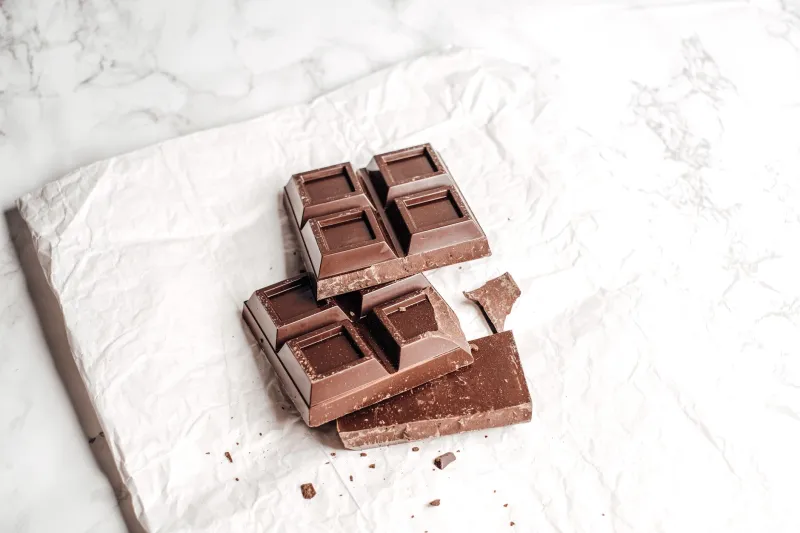
Listen to the snap. A clean, sharp snap when you break the bar indicates good tempering — a sign of quality craftsmanship. Bars that bend or crumble without snapping are often lower quality or have been stored poorly.
Let it melt slowly. Don't chew right away. Let the chocolate melt on your tongue and pay attention to what unfolds. Craft chocolate often reveals layers of flavor as it warms — the first impression might be one thing, the finish something else entirely.
Think in categories. Is it fruity? Earthy? Nutty? Floral? Does it have any acidity? How long does the flavor linger? You don't need to be a professional taster to notice these things — you just need to slow down for thirty seconds.
Compare bars side by side. The fastest way to develop your palate is to taste two or three different single-origin bars at once. The differences become much more obvious in contrast.
Where to Buy the Good Stuff
Specialty grocery stores like Whole Foods and local co-ops are increasingly stocking craft chocolate, which is great. But for the widest selection, shopping directly from makers' websites is almost always the better move. Most bean-to-bar producers sell online and ship nationwide, and buying direct means you're getting fresher chocolate and supporting the maker more directly.
If you want to explore broadly before committing to a favorite, a few online retailers specialize in curating craft chocolate from multiple producers — worth a search if you'd rather browse a range in one place.
One thing to keep in mind: craft chocolate isn't cheap. Bars typically run anywhere from $8 to $15 or more, which can feel like a lot until you understand what goes into them. These makers are paying fair prices for quality cacao, often working with small farming cooperatives, and producing in quantities that don't allow for the economies of scale that industrial chocolate relies on. The price reflects the real cost of doing this well.
A Different Kind of Chocolate Habit
The candy aisle isn't going anywhere, and there's no judgment here if a Snickers still hits the spot sometimes. But once you've spent a little time with the American bean-to-bar world, it's genuinely hard to go back to thinking of chocolate as a simple, uniform thing.
It's not. It's a food with as much complexity and regional variation as wine or cheese or coffee — a food that carries the fingerprint of the soil it came from, the hands that fermented it, and the maker who decided how to bring it to life. That's a pretty remarkable thing to find wrapped in foil on your kitchen counter.
Stock a few bars. Taste slowly. You'll see what we mean.