Squeeze, Slather, Drizzle: How America's Small-Batch Condiment Makers Are Ruining Store Shelves for Us Forever
Squeeze, Slather, Drizzle: How America's Small-Batch Condiment Makers Are Ruining Store Shelves for Us Forever
Let's be honest: most of us have a sad little cluster of condiments living in the fridge door. A squeeze bottle of generic hot sauce that's been there since last summer. A jar of yellow mustard that tastes like salt and memory. Maybe some jam that's mostly sugar and vibes. It gets the job done, sure — but it doesn't exactly make you excited to open the refrigerator.
That's changing fast. Across the country, a generation of small-batch producers is rethinking the condiment from the ground up — sourcing better ingredients, leaning into traditional techniques, and bringing a level of craft to hot sauce, mustard, and jam that most people associate with, say, cheese or wine. The results are genuinely exciting. And once you start building a curated condiment shelf, you'll wonder how you ever settled for anything less.
Why Condiments Are the New Pantry Frontier
Condiments occupy a funny spot in the food world. They're rarely the star of the plate, but they can absolutely make or break a meal. A great hot sauce doesn't just add heat — it adds depth, acidity, complexity. A properly made whole-grain mustard brings texture and a slow, rounded sharpness that the bright-yellow stuff could never dream of. And a jam made from heritage-variety fruit? It tastes like the actual fruit, not a memory of it.
The small-batch movement has been quietly building here for years, fueled by the same forces that elevated craft beer and artisan cheese: consumers who want to know where their food comes from, and makers who are obsessed enough to do things the hard way because the results are worth it.
Hot Sauce: More Than Just Heat
The American hot sauce market is enormous — and most of it is dominated by a handful of mass-produced brands that prioritize shelf stability and consistent heat levels over anything resembling nuance. But in the margins, something genuinely interesting is happening.
Small producers are working with single-origin peppers — sourcing specific varieties from specific farms, sometimes specific fields — and fermenting them in small batches to develop flavor before a drop of vinegar ever enters the picture. Fermentation is key here. It mellows raw pepper heat into something more layered, introduces a gentle funk, and brings out fruity or floral notes that a cooked-and-bottled sauce just can't replicate.
Look for producers who are transparent about their pepper sourcing. A label that tells you the pepper variety and where it was grown is a good sign. So is a short ingredient list — if you can't picture every item on it, that's worth a second look. Great small-batch hot sauces often have a best-by date that's closer than you'd expect, because they're made without the preservative load that keeps a mass-market bottle shelf-stable for years.
Some standout styles to explore: fermented green sauces with a bright, herbaceous quality that works beautifully on eggs and tacos; slow-roasted red pepper sauces with a smoky sweetness that's killer on grilled meats; and fruity habanero blends that bring serious heat alongside mango or pineapple notes that balance the fire. The range is genuinely impressive once you start looking.
Mustard: The Underdog Condiment Having Its Moment
Mustard might be the most underestimated condiment in the American kitchen. We've been trained to think of it as either the bright yellow squeeze bottle on a hot dog cart or the Dijon in a vinaigrette — functional, fine, forgettable. But whole-grain mustard made with real craft attention is a completely different animal.
The best small-batch mustard makers are doing things like soaking mustard seeds in craft beer before grinding — which introduces malt, bitterness, and a depth of flavor you won't find in anything from a big producer. Others are working with local apple cider vinegar or wine vinegars, adding honey from regional beekeepers, or incorporating spices in ways that make the final product feel more like a condiment you'd find at a Paris fromagerie than anything you'd grab at a chain grocery store.
Texture matters enormously here. A coarse, whole-grain mustard has a pop and chew that makes it interesting as a standalone spread — on a cheese board, on a sandwich, alongside roasted sausages. It's not just background noise; it's part of the eating experience. Look for makers who stone-grind in small batches, which preserves more of the mustard's natural oils and produces a more complex, aromatic result.
Mustard also has a surprisingly long fridge life once opened, which makes it a low-risk way to experiment. Grab a couple of small-batch versions and do a side-by-side with whatever you've been using. The difference is usually immediate and a little embarrassing.
Jam: When Fruit Actually Tastes Like Fruit
Here's the thing about most commercial jam: it tastes like sugar with a fruit suggestion. That's not an accident — pectin and high sugar ratios are how you get consistent texture and long shelf life at industrial scale. But when a small producer is working with heritage-variety fruit from a single orchard and cooking in small batches, the math changes entirely.
Heritage fruit varieties — the kinds that have largely disappeared from commercial agriculture because they don't ship well or ripen unevenly — often have dramatically more complex flavor than the varieties bred for supermarket shelves. A Gravenstein apple jam tastes nothing like a Gala apple jam. A Blenheim apricot preserve is a different product entirely from what you find in a grocery store. These fruits are intensely flavorful, sometimes tart, sometimes floral, and they make jams that actually taste like something specific and wonderful.
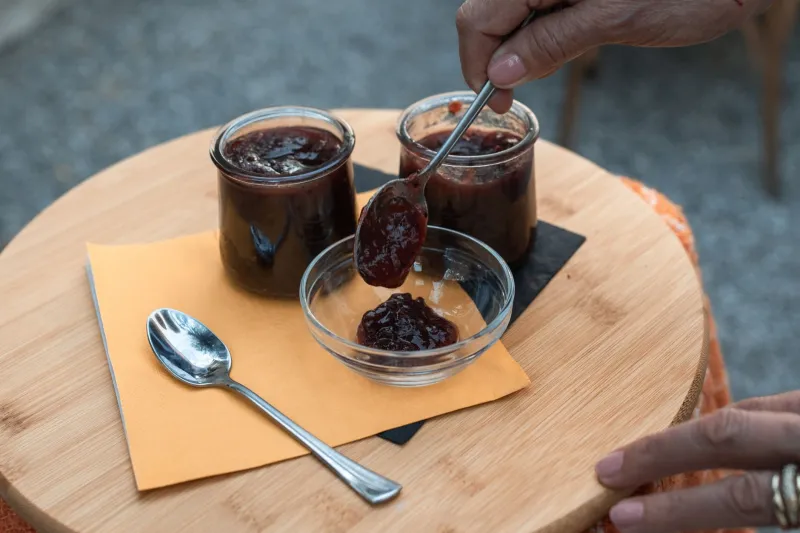
Small-batch jam makers often use less sugar, which means the fruit flavor comes forward instead of getting buried. Some work with no commercial pectin at all, relying instead on the natural pectin in the fruit and longer cooking times to achieve a set. The result is a looser, more intensely flavored product — less like a gel, more like concentrated fruit. It's spectacular on toast, obviously, but also stirred into yogurt, spooned over good cheese, whisked into a vinaigrette, or used as a glaze on roasted pork or duck.
Building Your Curated Condiment Shelf
So where do you start? A few practical thoughts:
Start with one of each. You don't need a dozen hot sauces to have a great condiment shelf. Pick one genuinely excellent fermented hot sauce, one interesting whole-grain mustard, and one standout jam, and actually use them. Pay attention to how they change what you're eating.
Shop farmers markets and specialty food stores. This is where small-batch condiment makers tend to show up first. Talking to the person who actually made the product is an underrated pleasure — they'll tell you what pairs well, how they make it, and what they're most proud of.
Look for transparency on labels. Good producers want you to know what's in the jar and where it came from. Vague ingredient lists and no sourcing information are red flags.
Don't be afraid of short shelf lives. A jam or hot sauce with a best-by date six months out isn't worse than one with a two-year window — it's often better, because it hasn't been engineered for longevity at the expense of flavor.
Rotate seasonally. The best small-batch condiment makers work with what's available. A summer strawberry jam gives way to a fall apple butter. A fresh green hot sauce in spring becomes a roasted red in winter. Following that rhythm keeps your shelf interesting and your cooking connected to the seasons.
The condiment shelf is one of the easiest places to start building a more intentional, more delicious kitchen. The jars are small, the price of entry is low, and the payoff — that moment when you reach for something and it actually makes your food better — is immediate. Start there. The rest of the pantry will follow.