Wake Up and Taste Something: Building a Gourmet Morning Table with America's Best Artisan Producers
Wake Up and Taste Something: Building a Gourmet Morning Table with America's Best Artisan Producers
For most of us, breakfast is a transaction. Coffee from whatever's in the cabinet. Toast from a loaf that's been sitting on the counter since Tuesday. Maybe an egg, maybe not. It gets the job done, and then the day takes over.
But something is shifting. Quietly, steadily, a loose network of American producers — small-batch grain millers, single-origin coffee roasters, obsessive fruit preservers, and farmers who raise chickens the old-fashioned way — has been rethinking what morning food can actually be. Not fancy in a precious way. Just honest, ingredient-forward, and genuinely delicious. The kind of breakfast that makes you slow down for fifteen minutes instead of eating over the sink.
If you've been spending real attention on your dinner pantry and ignoring your mornings, this one's for you.
The Porridge Problem (and How Heritage Grains Solve It)
Let's start with oats, because oats are where a lot of people's breakfast ambitions begin and end. The stuff in the round cardboard canister isn't bad, exactly. It's just... nothing. No flavor, no texture worth mentioning, no sense that anything living was involved in making it.
Heritage grain porridge is a different experience entirely. Producers like Anson Mills out of Columbia, South Carolina have been milling heirloom grains — including Carolina Gold rice grits, whole grain farro, and their celebrated oat groats — using traditional stone-milling techniques that preserve oils and flavor compounds that industrial processing strips away. Cook a bowl of their oat groats low and slow, and you get something nutty, slightly creamy, and genuinely satisfying in a way that instant oats simply aren't.
Out west, Bluebird Grain Farms in Washington's Methow Valley grows and mills certified organic emmer and einkorn wheat, along with a cracked emmer farro that makes an earthy, chewy morning porridge with real staying power. These are grains with backstories — ancient varieties that were nearly lost to monoculture agriculture — and cooking with them feels like a small act of preservation.
The practical upside: most of these products are shelf-stable and ship well. Stock a couple of options and rotate through them. Your mornings will thank you.
Coffee That Actually Has Something to Say
The specialty coffee world has been doing its thing for a couple of decades now, but the gap between a truly great roaster and the average grocery store bag is still enormous — and breakfast is where you feel it most.
The best small roasters in the country aren't just sourcing good beans; they're building relationships with individual farms, adjusting their roast profiles to highlight specific flavor notes, and getting coffee to you within days of roasting. Onyx Coffee Lab out of Springdale, Arkansas has earned a national reputation for exactly this kind of precision. Their single-origin offerings rotate seasonally and taste like what they are: specific places, specific harvests, handled with care.
For something more rooted in a particular regional identity, Methodical Coffee in Greenville, South Carolina brings a Southern sensibility to world-class sourcing, while Olympia Coffee Roasting in Washington state has been a quiet pioneer in direct-trade relationships for years. Whichever direction you go, the upgrade from commodity coffee to a freshly roasted single-origin is one of the easiest and most immediately noticeable improvements you can make to your morning.
Brew method matters too, but that's a whole other rabbit hole. Start with better beans.
The Jam Situation Deserves Serious Attention
Good toast with bad jam is a missed opportunity. And most jam — even the stuff marketed as artisan — is more sugar than fruit, cooked into a uniform sweetness that doesn't taste like any particular place or season.
The small-batch preservers doing it right work differently. They source fruit at peak ripeness from specific farms, use minimal added sugar, and let the fruit's natural character lead. June Taylor Company in Berkeley, California has been making some of the most sophisticated preserves in the country for years — her Seville orange marmalade and fruit butters are genuinely unlike anything you'll find on a standard grocery shelf. Sqirl (also out of LA) built an entire restaurant reputation partly on the strength of their preserves, which are bright, complex, and fruit-forward in the best possible way.
In the Northeast, Stonewall Kitchen gets a lot of attention, but if you want to go deeper, seek out smaller operations like Quince & Apple out of Madison, Wisconsin, whose unusual flavor combinations — think black pepper and fig, or rosé champagne and strawberry — bring something genuinely unexpected to the morning table.
A jar of really good jam lasts a while and costs maybe a few dollars more than the standard stuff. It's one of the highest-value upgrades in the breakfast pantry.
Eggs That Are Actually Worth Talking About
The egg carton label situation in American grocery stores is, to put it gently, a mess. "Cage-free," "free-range," "natural" — most of these terms are either unregulated or meaningless in practice. If you want eggs that taste noticeably different, you need to get closer to the source.
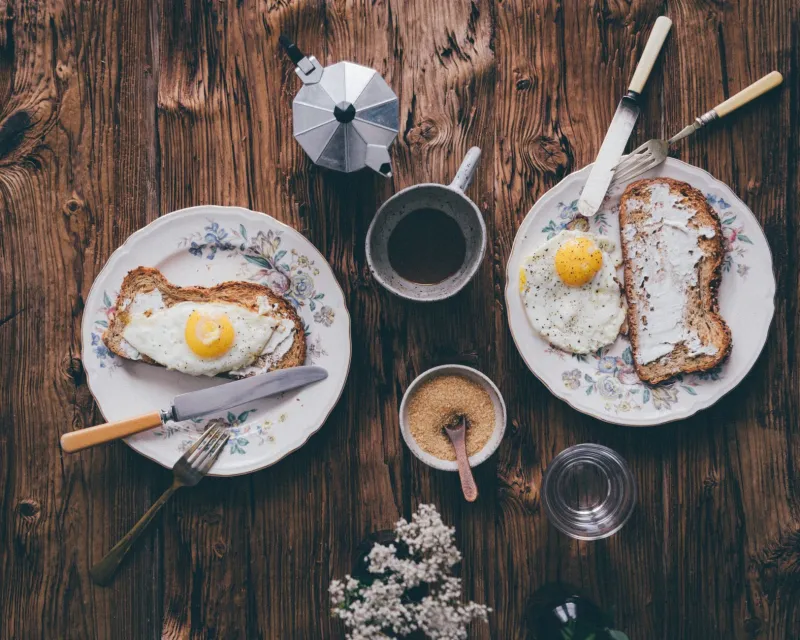
Farmers market eggs from small pasture-raised operations are the most reliable route. Birds that spend real time outside, eating bugs and grass alongside their feed, produce yolks that are a deeper orange-gold and have a richer, more complex flavor. You'll notice it immediately in a fried egg or a simple scramble.
If you're not near a good farmers market, a few farms have built direct-to-consumer shipping operations worth knowing about. Vital Farms out of Austin, Texas has scaled up considerably but still maintains meaningful pasture standards — their eggs are widely available and genuinely better than most alternatives. For a more direct connection, search out local CSA egg shares or farm delivery services in your area. The difference in the pan is real.
Building Your Elevated Breakfast Pantry
You don't need to overhaul everything at once. The beauty of approaching breakfast as a curated experience is that each small upgrade compounds on the others. Here's a simple framework:
Start with the anchor grain. Pick one heritage grain product — oat groats, cracked emmer, a stone-ground grits blend — and learn to cook it well. This becomes your weekday foundation.
Invest in fresh-roasted coffee. Order directly from a roaster, set up a subscription if you drink it daily, and pay attention to the roast date on the bag. Within two weeks of roasting is the sweet spot.
Keep two or three great preserves on hand. Rotate through flavors and seasons. A good marmalade for winter mornings, a bright berry jam for summer, something unusual in between.
Find a local egg source. Check your nearest farmers market, ask around in local food groups, or look into farm delivery options in your region. Once you find a source you trust, stick with it.
Round it out with good butter. This one barely needs saying, but cultured butter from a small creamery — Kerrygold is widely available and a solid baseline, though American producers like Vermont Creamery and Ploughgate Creamery are worth seeking out — makes everything on this list taste better.
Breakfast, done this way, doesn't take more time. It just takes a little more intention. And on a Tuesday morning when you're sitting with a cup of coffee that actually tastes like something, toast with jam that reminds you summer was real, and eggs with yolks the color of late afternoon light — that intention pays off in full.