Better Butter Is a Real Thing — and Small-Batch Creameries Are Proving It
Let's be honest about the butter in your fridge right now. It probably comes in a four-pack of foil-wrapped sticks, it cost somewhere between three and five dollars, and if someone asked you to describe the flavor, you'd probably say something like... buttery. Maybe a little salty. It does the job. It's fine.
Fine is exactly the problem.
Because once you've tasted butter made the way small American creameries are making it right now — slow-cultured, hand-churned, sometimes rolled in smoked sea salt or swirled with local honey — that four-pack in your fridge starts to feel like a genuine missed opportunity. Not because you need to spend more money on everything, but because butter is everywhere in your cooking. It's your morning toast, your sautéed vegetables, your pie crust, your pan sauce. Upgrading it costs less than a cocktail and changes more meals than almost any other single swap you could make.
That's the case artisan creameries across the country are quietly, deliciously making.
What Actually Makes Cultured Butter Different
Start with the word "cultured," because it's doing a lot of work here. Most commercial butter is made from sweet cream — fresh cream churned quickly into fat, with little time for any complexity to develop. Cultured butter starts the same way, but before churning, the cream is inoculated with live bacterial cultures and left to ferment for anywhere from a few hours to a couple of days. The result is a butter with a slightly tangy, almost yogurt-like depth, a more pronounced dairy richness, and a finish that actually lingers on the palate.
European butter has operated this way for centuries, which is why French and Danish butters have long had a reputation for tasting better. But American creameries are now doing the same thing with domestic cream — and in many cases, they're going further, experimenting with longer culture times, heritage breed milk, and finishing touches that put their products in a category of their own.
Fat content matters too. Standard American butter sits around 80% butterfat by law. Many artisan producers push closer to 84 or even 86%, which translates directly into a creamier texture, better performance in baked goods, and a more satisfying melt on warm bread.
The Producers Worth Knowing
Vermont Creamery, based in Websterville, Vermont, is probably the most accessible entry point into the artisan butter world. Their cultured butter has been on the market long enough that you might spot it at a well-stocked grocery store, but don't let the availability fool you — it's genuinely good, with a clean tang and a texture that spreadable butter dreams of being. It's a solid first step.
For something more distinctive, Ploughgate Creamery, also out of Vermont, has developed a devoted following among serious home cooks. Their hand-rolled cultured butter is made in small batches from local cream and finished with sea salt in a way that feels almost architectural — the salt crystals are present and purposeful, not just an afterthought. People who discover Ploughgate tend to become somewhat evangelical about it.
Out on the West Coast, Sierra Nevada Cheese Company in California produces a cultured butter that benefits from the state's exceptional dairy tradition. Meanwhile, smaller operations like Ronnybrook Farm Dairy in New York's Hudson Valley are making butter that reflects the pasture-raised quality of their milk in every bite — grassy, rich, and noticeably yellow from the beta-carotene in the cows' diet.
If you want to go deeper into the rabbit hole, seek out small creameries at your regional farmers market. Across the Midwest, the South, and the Pacific Northwest, independent butter makers are showing up with small-production runs, seasonal flavors, and the kind of product you genuinely can't find anywhere else. Herb-infused compound butters, cultured rolls dusted with local spices, honey butter made with single-origin varietal honey — this is the frontier, and it's worth exploring.
How to Use It Without Wasting a Gram
Good butter deserves to be used in ways that let it actually show up. A few practical notes:
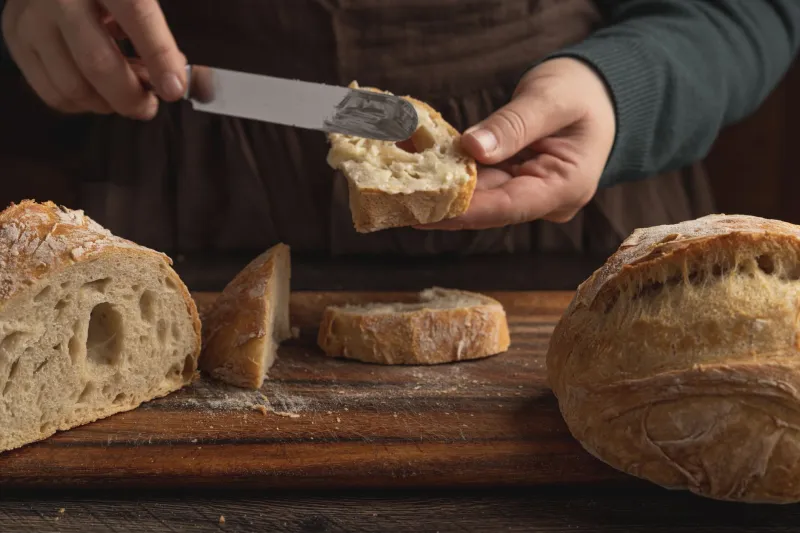
On bread and toast, don't rush it. Let the butter come to room temperature so it spreads without tearing, and give it a moment to melt slightly before you take a bite. This sounds obvious, but cold butter on toast is one of the most common ways people accidentally mute the flavor of something expensive.
In baking, high-fat cultured butter can change your results in noticeable ways. Pie crusts get flakier. Shortbread gets more tender. Croissants — if you're ambitious — get genuinely laminated layers. The extra fat means less water, which means less steam in the oven and better texture across the board.
In pan sauces and finishing, cultured butter's slight acidity actually works in your favor. A knob stirred into a pan sauce at the end adds richness and a subtle brightness that sweet cream butter doesn't quite deliver. Same goes for finishing pasta, dressing roasted vegetables, or melting over a just-grilled steak.
As a table butter, consider serving it in a small crock at room temperature with good flaky salt on the side. Guests who've never thought twice about butter will suddenly have opinions.
Storing and Sourcing Without Overthinking It
Artisan butter, especially cultured varieties, tends to have a shorter shelf life than commodity sticks because it contains fewer stabilizers and preservatives. Most will keep well in the refrigerator for two to three weeks, and they freeze beautifully for up to six months without any real quality loss. Buy a few rolls when you find a producer you love, freeze what you won't use immediately, and you're set.
For sourcing, farmers markets are your best bet for truly local and small-batch production. Beyond that, many artisan creameries sell directly through their websites and ship nationally — Vermont Creamery, Ploughgate, and others all have online storefronts. Specialty grocery stores like Whole Foods, local co-ops, and independent cheese shops are increasingly carrying small-production butters as well.
The price jump over commodity butter is real — expect to pay somewhere between eight and fifteen dollars for a roll or crock of the good stuff, depending on the producer and your location. But consider the math: a roll of artisan butter lasts most households a couple of weeks. That's a few cents more per day to make every piece of toast, every sautéed vegetable, every piece of cornbread noticeably better. As kitchen upgrades go, it's hard to find a better return on investment.
The Simplest Upgrade in Your Kitchen
There's a tendency to think of gourmet ingredients as special occasion purchases — things you pull out for dinner parties or holiday cooking. Good butter doesn't work that way. It earns its place in your refrigerator every single morning, every weeknight dinner, every lazy Sunday batch of scrambled eggs.
That's what makes the artisan creamery movement so exciting from a practical standpoint. This isn't about chasing luxury for its own sake. It's about recognizing that one of the most fundamental ingredients in the American kitchen has been quietly underperforming for decades — and that a growing number of small producers are doing something genuinely better with it.
Your toast has been waiting long enough.